Mold is all around us. It’s a natural part of indoor and outdoor environments. Thankfully, it’s benign in most cases. However, there are instances in which mold is detrimental to our health.
For instance, mold build-up within your home’s HVAC ducts can lead to allergic reactions, chronic fatigue, breathing problems, headaches, and more. When mold is on the food you consume, it can enter the body, spreading mycotoxins and wreaking havoc on your health.
Mycotoxins are naturally occurring (they’re not synthetic)
Certain molds produce mycotoxins
Mycotoxins can be found in many crops and foodstuffs (wheat, apples, etc.)
Mycotoxins can cause serious health threats to humans and animals, including allergic reactions, asthma, pneumonia, eczema, and even memory loss and vision problems.
The good news is that you can remove those toxins from your body. Mold detox is the process of eliminating mycotoxins from your body’s tissues using what are called “binders”. Not sure what binders are or how they work to facilitate mold detox and improve health? This article will explore:
What Are Binders and Why Are They Essential for Mold Detox?
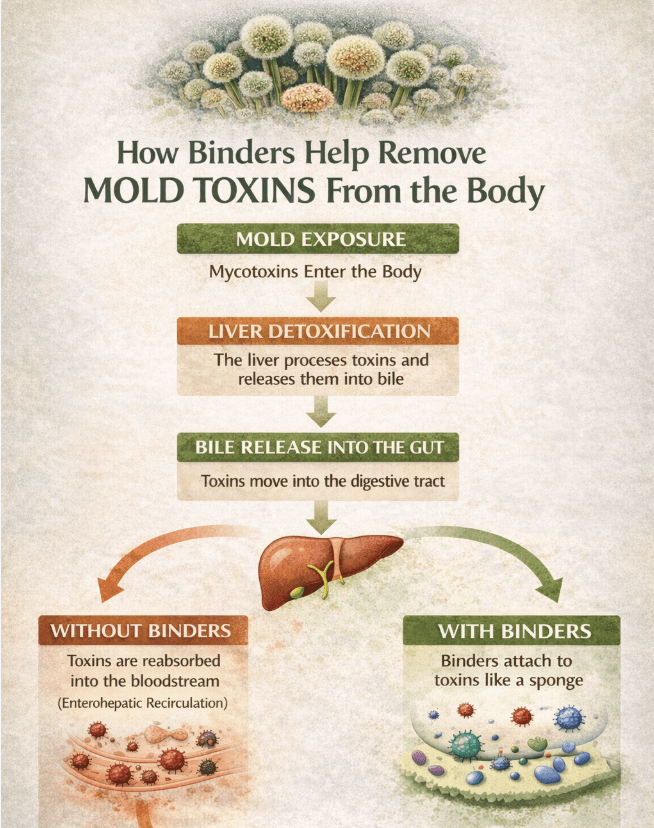
Binders attach to mycotoxins and bile in the gut, preventing reabsorption and facilitating elimination. The liver detoxifies mycotoxins and releases them into bile, but without binders, these toxins can recirculate in the body through enterohepatic circulation.
Binders act like magnets or sponges. They attract and bind to the toxins in your bile. The body can then excrete them naturally, preventing them from recirculating and potentially causing additional health problems.
How MycotoxinsOverload the Body & Impair Detoxification
Mycotoxins accumulate in fatty tissues, the brain, and the liver, leading to chronic inflammation and neurological symptoms. Mold exposure disrupts immune function, and a high toxin load overwhelms natural detox pathways, making elimination inefficient.
Different molds produce different mycotoxins. Some of the most common include the following:
Aflatoxins
Ochratoxins
Zearalenone (ZEA)
Patulin
Sterigmatocystin (STCs)
Citrinin
Ergotamine
Deoxynivalenol (DON)
Fumonisins
Trichothecenes
When consumed, these mycotoxins quickly affect the body, causing disease (called mycotoxicosis and mycosis). In most cases, these diseases are difficult to identify because they share commonalities with many other, more widespread diseases. The impacts of mycotoxins can vary widely depending on how they enter the body.
For instance, if they’re inhaled, they can slow down basal breathing and stimulate the respiratory ciliary beat frequency. If they’re consumed orally, they can cause inflammation of the GI tract. Once within the body, they can settle into other tissues (brain, liver, and fatty tissues throughout the body) and cause symptoms ranging from irreversible liver disease to neurological degeneration.
The liver is the body’s toxin fighter. It’s responsible for breaking down harmful substances (like mycotoxins) and repackaging them for excretion. Your body’s natural detoxification process looks like this:
First, the liver secretes enzymes that turn toxins into harmless substances. Note that most toxins can be converted, but not all, and many mycotoxins are not.
Toxins that aren’t converted during the first phase are processed again until they are water-soluble.
Those toxins are then stored in the body’s bile or excreted via urine. Note that toxins stored in the bile are eventually excreted by the body through bowel movements (they’re not permanently stored).
However, there are breakdowns within this process. For instance, the liver can only detoxify the mycotoxins that don’t settle in other body tissues (such as the lung or brain tissue). An additional challenge is that even once broken down and processed, mycotoxins can still be dangerous and, if they recirculate before they can be excreted, can cause additional health problems.
Thankfully, you can do many things to help your body process mycotoxins more efficiently and effectively, including:
Eating a balanced diet heavy in fruits, vegetables, and lean protein
Washing produce before eating it
Avoiding excess alcohol (alcohol is a liver toxin that causes liver damage in its own right)
Drinking plenty of water
Using natural binders (at the proper time in your mold detox protocol)
Alone, the liver does a great job of detoxifying the body from most threats. Binders help the liver do its job and protect against mycotoxins recirculating.
The Science of Binders: How They Help Eliminate Mycotoxins
Binders trap mycotoxins in the gut through adsorption and chelation, reducing the toxin burden. Different binders target specific mycotoxins, while some also decrease inflammation associated with toxin exposure.
Adsorption: According to the International Adsorption Society, adsorption “involves the separation of a substance from one phase, accompanied by its accumulation or concentration at the surface of another”. It transforms molecules of a liquid, gas, or solid into a thin film on another solid.
Chelation: Chelation therapy is used in treating heavy metal exposure. In treating mycotoxins, it involves ingesting a binder that attaches to the toxin, allowing the body to excrete it through urine, similar to the way chemical binders do with heavy metals, like arsenic, mercury, or lead.
Of course, no one binder works for all mycotoxins. Understanding the different binders, their pros and cons, and the mycotoxins they’re most effective against is important for effective treatment.
The Best Binders for Mold Detox and Their Specific Functions
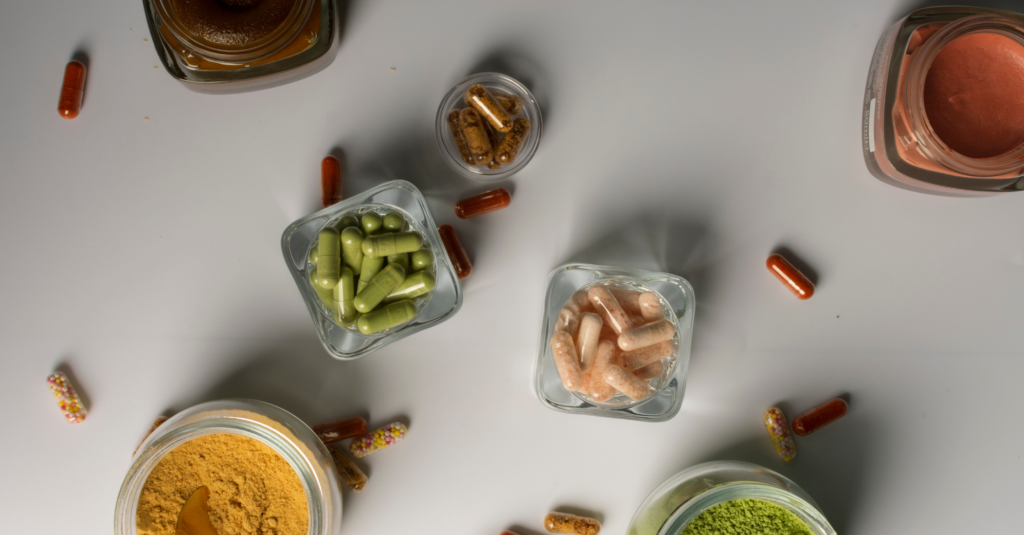
Binders come in all shapes and forms, from the familiar, like activated charcoal, to the exotic, like zeolite, to the overlooked, like probiotics.
Activated Charcoal – The Universal Toxin Binder
Activated charcoal has been used for everything from water filtration to absorbing poisons. It’s also effective in binding mycotoxins.
Binds: Most mycotoxins, heavy metals, pesticides
Pros: Strong adsorption capacity, widely available
Cons: Can bind to nutrients, may cause constipation
Bentonite clay (an antibacterial and anti-inflammatory and zeolite (a naturally occurring crystalline mineral) both bind to certain mycotoxins.
Binds: Aflatoxins, heavy metals, environmental toxins
Pros: Gentle, alkalizing, supports gut health
Cons: Can cause dehydration and constipation if not used properly
Chlorella – A Superfood Binder for Heavy Metals & Mold
If you’ve visited a health food store, you’ve seen chlorella for sale. This green powder originates from algae and can bind to specific mycotoxins.
Binds: Aflatoxins, dioxins, lead, mercury
Pros: Nutrient-dense, supports liver detox
Cons: Can cause mild nausea initially
Cholestyramine & Colesevelam – Prescription Bile Binders
Not all binders are found in the natural world. Cholestyramine (a cholesterol drug) and colesevelam (a cholesterol and diabetes drug) both bind to different mycotoxins.
Binds: Ochratoxin A, zearalenone, glyphosate
Pros: Powerful for mycotoxin detox
Cons: Requires medical supervision, can deplete fat-soluble vitamins
Glucomannan & Citrus Pectin – Fiber-Based Binders
Coming back to the natural world, we have glucomannan, which is derived from plant cells, and citrus pectin, a well-known gelling agent derived from citrus rind pith.
Binds: Mycotoxins, cholesterol, endotoxins
Pros: Supports gut motility, prebiotic benefits
Cons: Must be taken with plenty of water
Humic & Fulvic Acid – The Forgotten Binders for Mycotoxin Detox
Humic and fulvic acids come from decomposing plant material (humus) and are known for their chelating capabilities.
Binds: Heavy metals, pesticides, mold toxins
Pros: Supports mitochondria, reduces inflammation
Cons: Limited research on specific mycotoxin binding
Probiotics – The Missing Piece in Mycotoxin Detox
Probiotics have seen a lot of interest in recent years for good reason: they have a profound impact on gut health. Probiotics help keep your gut flora balanced, which affects everything from your metabolism to your mood. However, probiotics are also powerful binders and help the liver successfully process mycotoxins.
Strains That Bind Mycotoxins:
Lactobacillus plantarum – Binds aflatoxins
Saccharomyces boulardii – Binds gliotoxin and ochratoxin A
Bacillus subtilis – Reduces fungal load in the gut
Probiotics Also Support:
Restoration of gut microbiome after toxin exposure
Breakdown of mold-derived toxins in the intestines
Immune regulation and inflammation control
How to Take Binders for Maximum Effectiveness
To maximize their effectiveness, you need to know a few rules about taking binders. First, take them separately from any food, medications, or supplements. Second, don’t take them for extended periods unless your doctor recommends it. Most people only need to take them for three to six months. Finally, make sure you take them with plenty of water and pay attention to your gut health (taking probiotics and prebiotics and eating a gut health-friendly diet).Do not use them on children without a doctor’s supervision.
Potential Side Effects and How to Minimize Detox Reactions
Like all supplements, binders come with some potential side effects.
Nutrient depletion risks: Vitamin A, D, E, K, magnesium, calcium & zinc
To help minimize the chance of experiencing these, you’ll want to increase your hydration levels while taking a binder. Speak with your doctor about mineral supplements to help your body and support bile flow, as well.
Key Takeaways: How to Use Binders Effectively in Mold Detox
Binders remove mold toxins and prevent reabsorption. However, different binders target specific toxins, so personalized detox plans are most effective. You also need to pay attention to your gut health because it significantly influences detox success. A holistic approach—including diet, hydration, and lifestyle—enhances the results you experience.
There is no one-size-fits-all solution when it comes to detoxifying the body from mycotoxins. Work with a healthcare practitioner to determine the best binders for your detox plan.
Understanding Anxiety Anxiety is a complex condition that can have both physical and psychological components. From a holistic medical perspective, anxiety involves the interplay between genetic, environmental, and lifestyle factors. Here are a few takeaways from a holistic viewpoint: It’s
The month of April sees National Infertility Awareness Week, a full seven days dedicated to a struggle that roughly 17.5% of women in the world experience. Infertility can be one of the most isolating experiences for both men and women.
The art of relaxation… Some people reach for a glass of wine; others book a yoga class. But what if we told you there’s a new wave of relaxation taking the wellness world by storm? And what if we told
Get your definitive guide to healing from mold naturally
We will never spam you or share your email with anyone. In addition to the guide you’ll also receive semi-regular email updates with tips, tools, offers and exclusive resources. All emails include an unsubscribe link, you may opt-out at any time. Read our Privacy Policy to see how your data is handled.
WAIT! Don't Leave
Empty-Handed!
You came looking for help healing from mold exposure, so why not download our definitive guide to healing from mold naturally?
JOIN MY NEWSLETTER + GET MY FREE HEALTHY LIFESTYLE GUIDE!
Sign up for my newsletter for the latest holistic health advice. By signing up, you will receive my Healthy Lifestyle guide right away to your inbox! This guide will have the most important tips and tools to get started on a holistic lifestyle!
We will never spam you or share your email with anyone. In addition to the guide you’ll also receive semi-regular email updates with tips, tools, offers and exclusive resources. All emails include an unsubscribe link, you may opt-out at any time. Read our Privacy Policy to see how your data is handled.