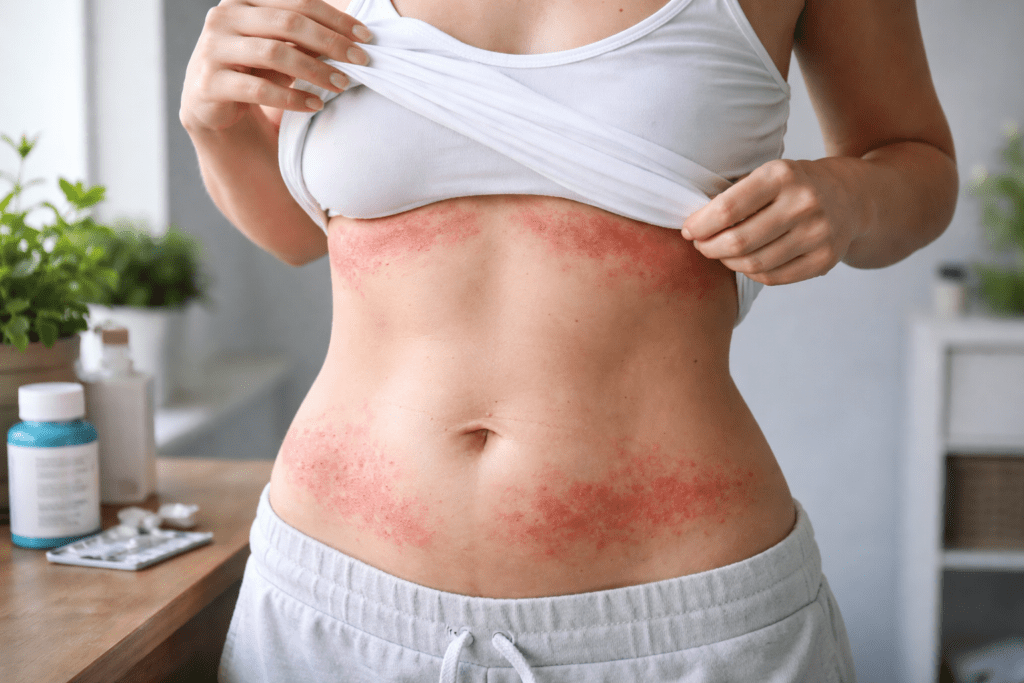
A 29-year-old female presented to the clinic with the chief complaint of recurrent, intensely itchy rashes in the armpit and perianal regions. The rashes had been present intermittently for approximately 1 year and were characterized by redness, irritation, and itching. She had previously been evaluated by her OB-GYN and was prescribed a topical antifungal cream, which provided temporary relief but did not fully resolve the condition. The rash would improve while using the medication, but returned shortly after discontinuation.
Recurrent candidiasis is a common condition, with chronic stress and reduced antioxidant capacity identified as key predisposing factors. Studies show that women with recurrent candida infections demonstrate significantly blunted morning cortisol levels compared to controls (p<0.002), indicating signs of chronic stress, and stress is considered the primary cause of candidiasis.
During the intake, the patient reported that the onset of the rashes coincided with a particularly stressful period in her life. In the previous year, her grandmother had been dying from cancer. During this time, the patient began experiencing recurrent strep throat infections and was prescribed antibiotics multiple times, estimating 4-5 courses over that year (approximately one course every 2-3 months).
Antibiotic use is a well-established risk factor for Candida overgrowth. Studies show that antibiotics significantly alter the microbiome, transforming the gut from a niche that restrains Candida to one that promotes invasive growth. Additionally, antibiotic treatment increases carbohydrates, sugar alcohols, and primary bile acids, all of which promote candida growth, while decreasing carboxylic acids and secondary bile acids that normally inhibit it.
Shortly after this period of repeated antibiotic use, she began noticing several gastrointestinal symptoms that were not previously present. These included significant bloating, malodorous gas, episodic nausea, and irregular bowel movements. Her stools alternated between constipation and watery diarrhea, and she frequently noticed mucus in the stool. She also reported increasing anxiety and stress during this time, along with notable sugar cravings and gradual weight gain.
The patient attempted several dietary and supplemental interventions before. She had tried eliminating both gluten and dairy, which provided minimal benefit. She also experimented with various probiotics and herbal teas to support digestion. While some of these measures provided mild or temporary improvement, none resulted in sustained resolution of her symptoms.
Physical observation during the visit revealed a thick white coating on the tongue that did not easily scrape off. This finding is often associated with yeast overgrowth or gastrointestinal dysbiosis. Combined with the patient’s symptom presentation and history of repeated antibiotic exposure, the clinical picture suggested possible intestinal Candida overgrowth contributing to both her digestive symptoms and recurrent skin rash.
LABS
A comprehensive stool analysis (GI-MAP) was ordered. Results confirmed the presence of Candida overgrowth, supporting the working hypothesis that microbial imbalance within the gut, secondary to recurrent antibiotic use and emotional stress impairing immune & digestivefunction, is the most likely culprit to her symptom picture.
TREATMENT
The treatment plan focused on addressing the underlying dysbiosis while also supporting the patient emotionally during an ongoing period of grief.
A temporary anti-Candida diet was recommended to reduce dietary sugars and refined carbohydrates that may promote yeast growth. Research shows that a ketogenic diet significantly potentiated the therapeutic effect of antifungals, resulting in a reduction in fungal burden.
Digestive bitters were prescribed, 5 drops on the tongue before meals, to stimulate digestive function and improve gastrointestinal signaling. Here, I was particularly interested in supporting the release of bile, which acts as a natural antimicrobial and antifungal to correct dysbiosis. This is particularly relevant given that antibiotic treatment decreases secondary bile acids, which normally inhibit C. albicans growth.
Targeted anti-microbial support was initiated with an herbal formula (CandiaStat) at a dose of 4capsules daily with meals. A binder was recommended to be taken at night, as needed in the event of die-off symptoms, such as headache, nausea, or fatigue.
Given the emotional context of the case, homeopathic support was also provided. The patient was prescribed Natrum muriaticum 30C once daily, selected based on her specific emotional presentation (e.g., withdrawing) and the presence of unresolved grief following her grandmother’s death.
Additionally, homeopathic Candida albicans 6C was prescribed nightly.

FOLLOW UP
At her 1-month follow-up, the patient reported several significant changes. During the first 2weeks of treatment, she experienced frequent episodes of crying, which she described as cathartic. She reported feeling emotionally lighter afterward and felt that some of the grief she had been holding onto had begun to move.
Her gastrointestinal symptoms had improved dramatically. Bloating had resolved, bowel movements had become regular and well-formed, and the previously noted mucus in the stool was no longer present. Malodorous gas was minimal to absent. She also reported improvements in anxiety, sleep quality, and energy levels.
The rash had improved by approximately 75%.
She also described a shift in her emotional landscape; rather than feeling dominated by grief, she now noticed increased tendencies toward self-comparison and self-consciousness, particularly related to work performance and feelings of imposter syndrome.
Based on this updated constitutional picture, the homeopathic prescription was adjusted. Natrum muriaticum was discontinued, and Lycopodium 30C was prescribed once daily. A topical herbal antifungal cream was also added to further support the resolution of the remaining rash.
At the 2-month follow-up, she reported complete resolution of the rash. Her gastrointestinal symptoms remained stable with normal bowel movements and no bloating or gas. She described her anxiety as significantly improved and stated that she felt better overall than she could remember feeling in years.
At that time, the majority of interventions were discontinued. The patient was advised to continue digestive bitters before meals to support digestive function and was encouraged to begin incorporating daily nutritive herbal infusions, particularly nettle, for ongoing nutritional support and maintenance.
She was also guided through the gradual reintroduction of foods that had been restricted during the anti-Candida dietary phase while monitoring for any return of symptoms.
Follow-up was recommended on an as-needed basis.
Start your healing journey with us…

REFERENCES
Highlights Regarding Host Predisposing Factors to Recurrent Vulvovaginal Candidiasis: Chronic Stress and Reduced Antioxidant Capacity. PloS One. 2015. Akimoto-Gunther L, Bonfim-Mendonça Pde S, Takahachi G, et al.
Signs of Chronic Stress in Women With Recurrent Candida Vulvovaginitis. American Journal of Obstetrics and Gynecology. 2005. Ehrström SM, Kornfeld D, Thuresson J, Rylander E.
Stress as a Cause of Chronic Recurrent Vulvovaginal Candidosis and the Effectiveness of the Conventional Antimycotic Therapy. Mycoses. 2006. Meyer H, Goettlicher S, Mendling W.
A Clinical Study Provides the First Direct Evidence That Interindividual Variations in FecalΒ-Lactamase Activity Affect the Gut Mycobiota Dynamics in Response to Β-Lactam Antibiotics. mBio. 2022. Delavy M, Burdet C, Sertour N, et al.
A Peptidoglycan Storm Caused by Β-Lactam Antibiotic’s Action on Host Microbiota Drives Candida Albicans Infection. Nature Communications. 2021. Tan CT, Xu X, Qiao Y, Wang Y.
Antibiotic-Induced Gut Metabolome and Microbiome Alterations Increase the Susceptibility to Candida Albicans Colonization in the Gastrointestinal Tract. FEMS Microbiology Ecology. 2020. Gutierrez D, Weinstock A, Antharam VC, et al.
Antibiotic Use and Gut Microbiome Composition Links From Individual-Level Prescription Data of 14,979 Individuals. Nature Medicine. 2026. Baldanzi G, Larsson A, Sayols-Baixeras S, et al.
Antibiotics, Gut Microbiota, and Irritable Bowel Syndrome: What Are the Relations?. World Journal of Gastroenterology. 2022. Mamieva Z, Poluektova E, Svistushkin V, et al.
Recurrent Amoxicillin Exposure Disrupts Colonic Homeostasis Through Oxidative Stress, DNA Repair Dysregulation, and Gut Dysbiosis-Driven Inflammation. Chemico-Biological Interactions. 2026. Akhtara N, Bharali MK.
The Pathogenetic Significance of Intestinal Candida Colonization–a Systematic Review from an Interdisciplinary and Environmental Medical Point of View. International Journal of Hygiene and Environmental Health. 2002. Lacour M, Zunder T, Huber R, et al.
Candida Spp. In Human Intestinal Health and Disease: More Than a Gut Feeling. Mycopathologia. 2023. Kreulen IAM, de Jonge WJ, van den Wijngaard RM, van Thiel IAM.
Inflammation and Gastrointestinal Candida Colonization. Current Opinion in Microbiology. 2011. Kumamoto CA.
Candida Pathogenicity and Interplay With the Immune System. Advances in Experimental Medicine and Biology. 2021. Valand N, Girija UV.
Vulvovaginal Candidosis. Lancet. 2007. Sobel JD.
A Ketogenic Diet Enhances Fluconazole Efficacy in Murine Models of Systemic Fungal Infection. mBio. 2024. Palmucci JR, Sells BE, Giamberardino CD, et al.
The Effects of Nutraceuticals and Herbal Medicine on Candida Albicans in Oral Candidiasis: A Comprehensive Review. Advances in Experimental Medicine and Biology. 2021. Gharibpour F, Shirban F, Bagherniya M, et al.